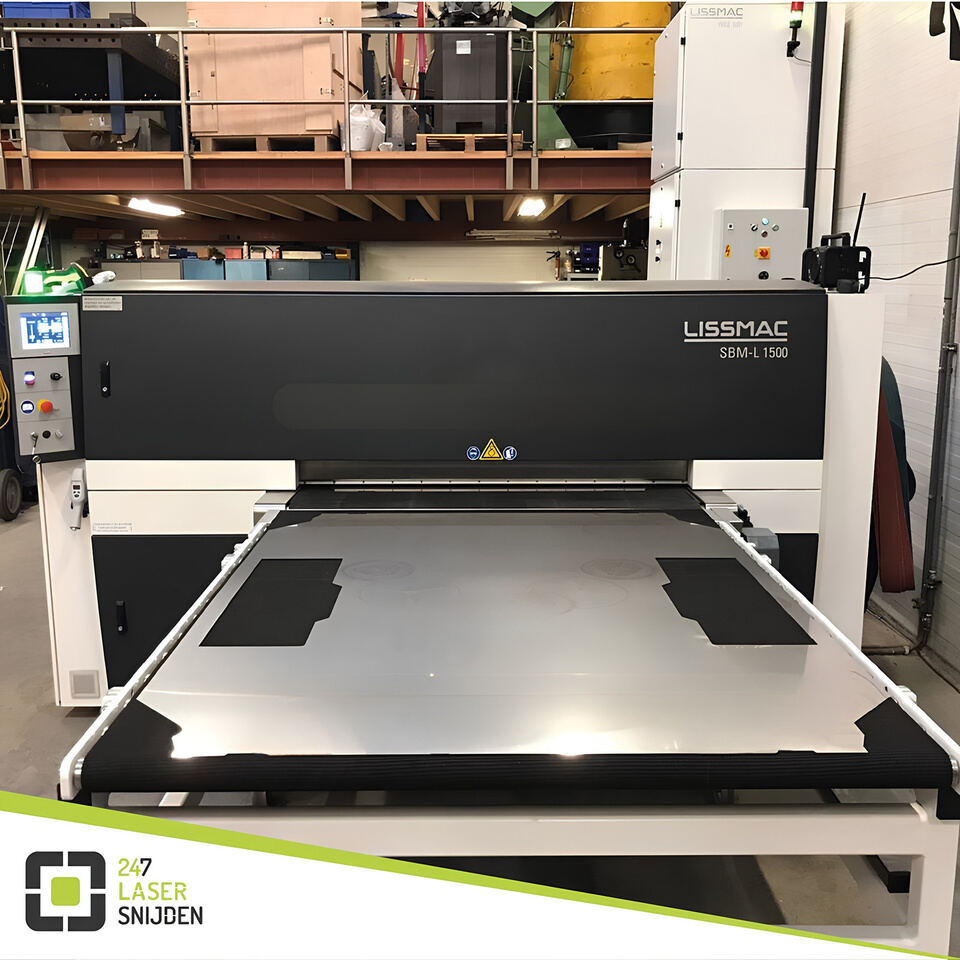
These processes are used to finish parts after cutting or processing, improve their surface finish, prepare them for assembly, or facilitate their integration into a production line.
Deburring
Deburring involves removing burrs or rough edges that may appear after a cutting orCNC machining operation.
This step helps improve the safety of part handling, the appearance of the parts, and their compatibility with subsequent operations.
It can be designed to meet different levels of requirements, depending on the room's intended use.
Chamfering
Chamfering ing creates an angle or slope on the edge of a metal part.
It may be necessary to prepare for a welding operation, facilitate an assembly, or meet a drawing requirement.
This operation is particularly useful when the part's geometry or the method used to integrate it requires specific edge preparation.
Tapping
Tapping involves cutting an internal thread in a metal part to allow for assembly using screws or bolts.
This is a small-scale machining operation frequently used on parts intended to be assembled, fastened, or integrated into more complex assemblies.
It allows you to add an assembly feature directly to the manufactured part.
Flattening
Flattening ing is used to correct or reduce any warping in a sheet of metal or a workpiece after cutting or forming.
This process improves flatness and facilitates the subsequent manufacturing, assembly, or installation steps.
It is particularly useful for parts whose geometry or tolerances require good dimensional stability.
Shotblasting
Shotblasting ing is a surface treatment process that involves blasting the workpiece with metal abrasives.
In particular, it is used to clean the surface, remove certain impurities, or prepare the part before painting, treatment, or assembly.
This step can help ensure a uniform surface finish in accordance with the specified requirements.
Brushing
Brushing ing is used to improve the surface finish of a metal part by removing certain marks, light oxidation, or surface irregularities.
It can be used to improve the appearance, prepare a surface, or achieve a more even finish.
The level of finish depends on the material, the part's geometry, and the desired result.
Tribofinishing
Tribofinishing ing is a mechanical finishing process that relies on controlled friction between parts, abrasive media, and sometimes specific additives.
It improves the surface finish, rounds off edges, and ensures a uniform finish on small- and medium-sized parts.
This process is suitable for production runs that require regular processing of multiple similar parts.
Operations Integrated into the Oxymetal Process
These various finishing are offered based on the characteristics of the parts, the requirements of the specifications, and the planned downstream operations.
They are part of a comprehensive production process, from cutting the material to preparing the parts for delivery. This organizational structure makes it possible to coordinate the various stages of manufacturing, minimize disruptions in the production flow, and deliver parts that meet the requirements defined with the customer.