
Commitments
At Oxymetal, quality isn’t limited to cutting, bending or metal fabrication. It also extends to post-production, preparation and delivery of the parts.
These operations help ensure that shipments comply with requirements, that products are properly identified, and that they are handled correctly within our clients' logistics organizations.
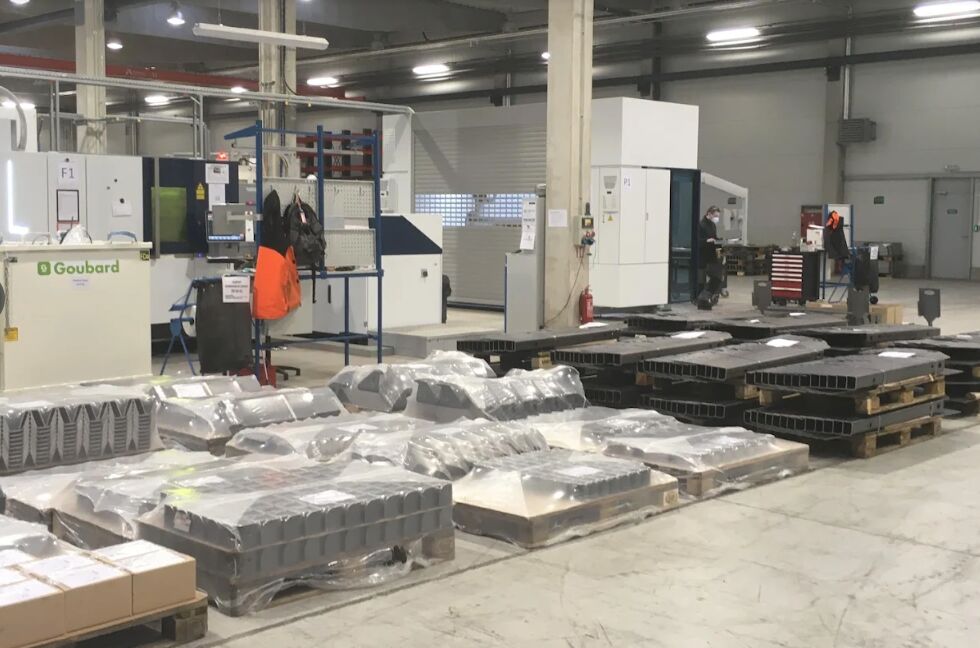
The parts manufactured by Oxymetal are prepared in accordance with the requirements defined with each customer. Packaging takes into account the nature of the parts, their transportation constraints, the risk of impact or deformation, and the handling procedures upon receipt.
Palletization ing is organized to facilitate transportation, storage, and receiving operations. Depending on the needs, it may incorporate specific requirements related to quantities per pallet, the grouping of SKUs, the loading method, or constraints specific to the customer’s production lines.
Labeling ensures the identification of delivered parts and pallets. It contributes to the traceability of material flows, compliance with documentation requirements, and the smooth integration of products into the customer’s receiving or production systems.
Oxymetal can operate under various logistical arrangements, depending on the volumes, delivery frequencies, and production needs defined with the customer.
This on-demand delivery allows shipments to be organized based on requests submitted by the customer, within the framework of a schedule or a previously established agreement. This approach is well-suited for recurring production runs that require a certain degree of flexibility in terms of volumes or delivery dates.
The kanban is based on a replenishment principle triggered by actual consumption or by defined thresholds. It allows for the gradual organization of supply flows, in line with needs observed on the ground.
The Just-in-Time involves synchronizing the production and delivery of parts with their intended use at the customer’s site. This organizational approach requires precise coordination of information, production, and transportation flows.
The supply chain relies on coordination between customer data, production planning, order fulfillment, and shipping. At Oxymetal, this coordination is supported in particular by the sales, production, quality, and logistics teams, as well as by the IT tools used to track orders and deliveries.
Packaging, palletizing, labeling, call-off delivery, kanban and Just-in-Time are thus complementary parts of the industrial organization. They contribute to the smooth execution of orders and the integration of Oxymetal parts into customers’ production flows.