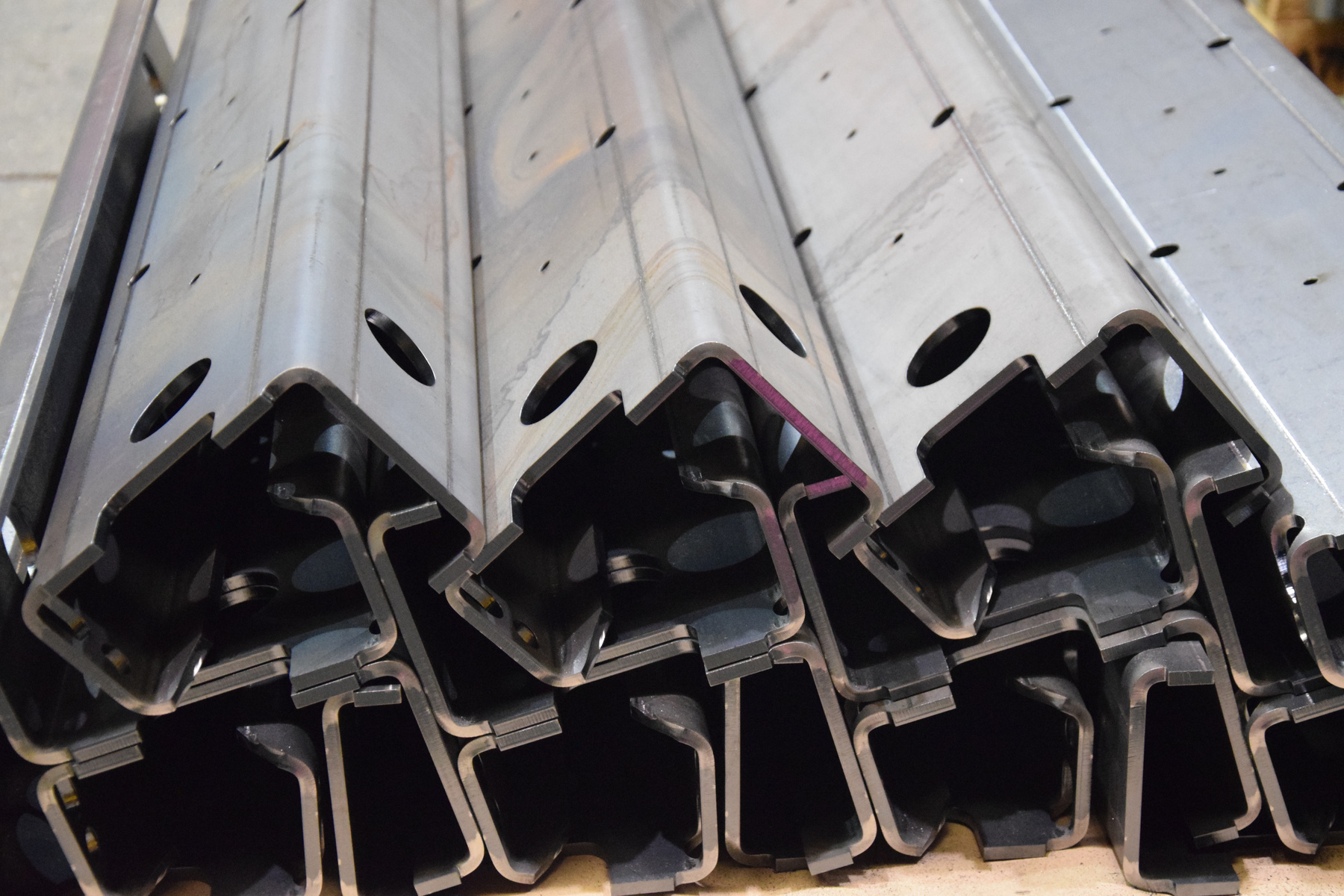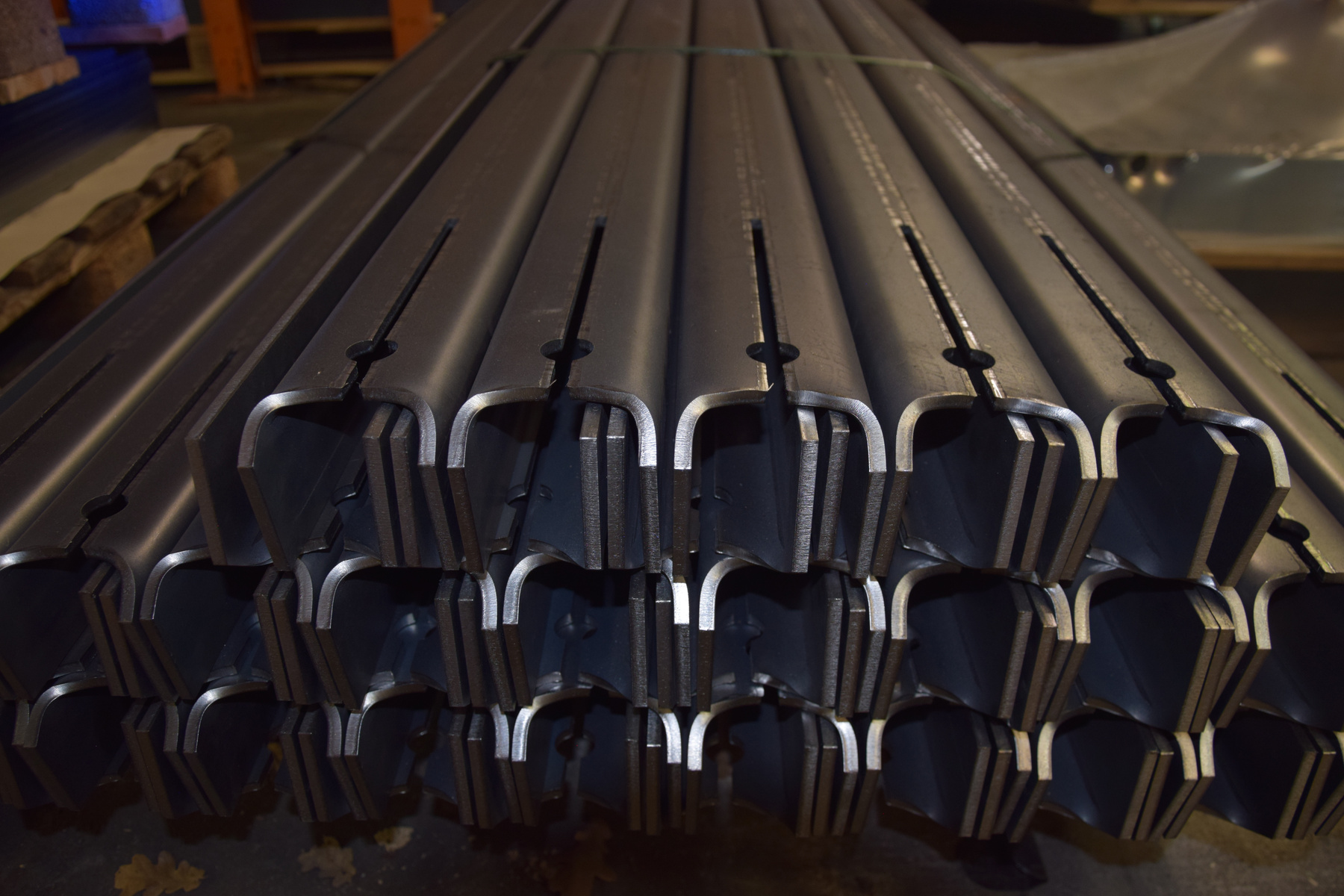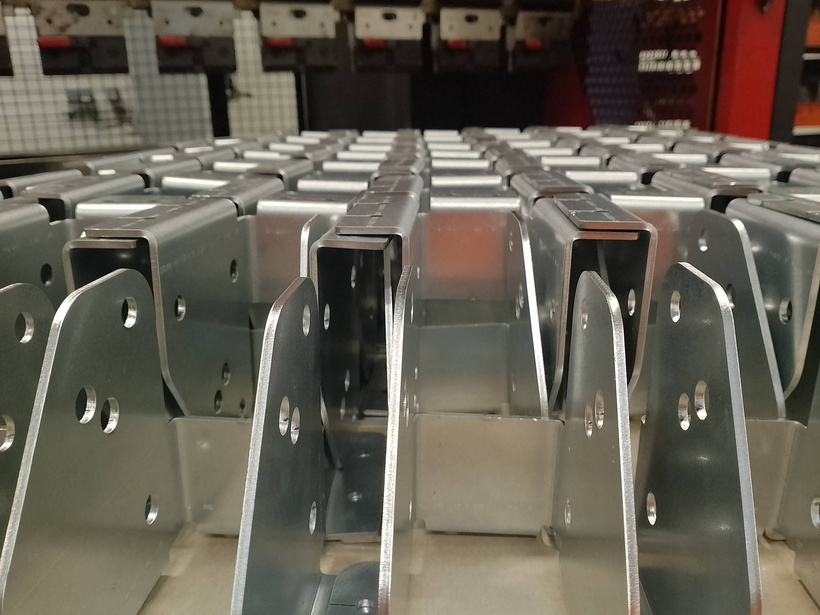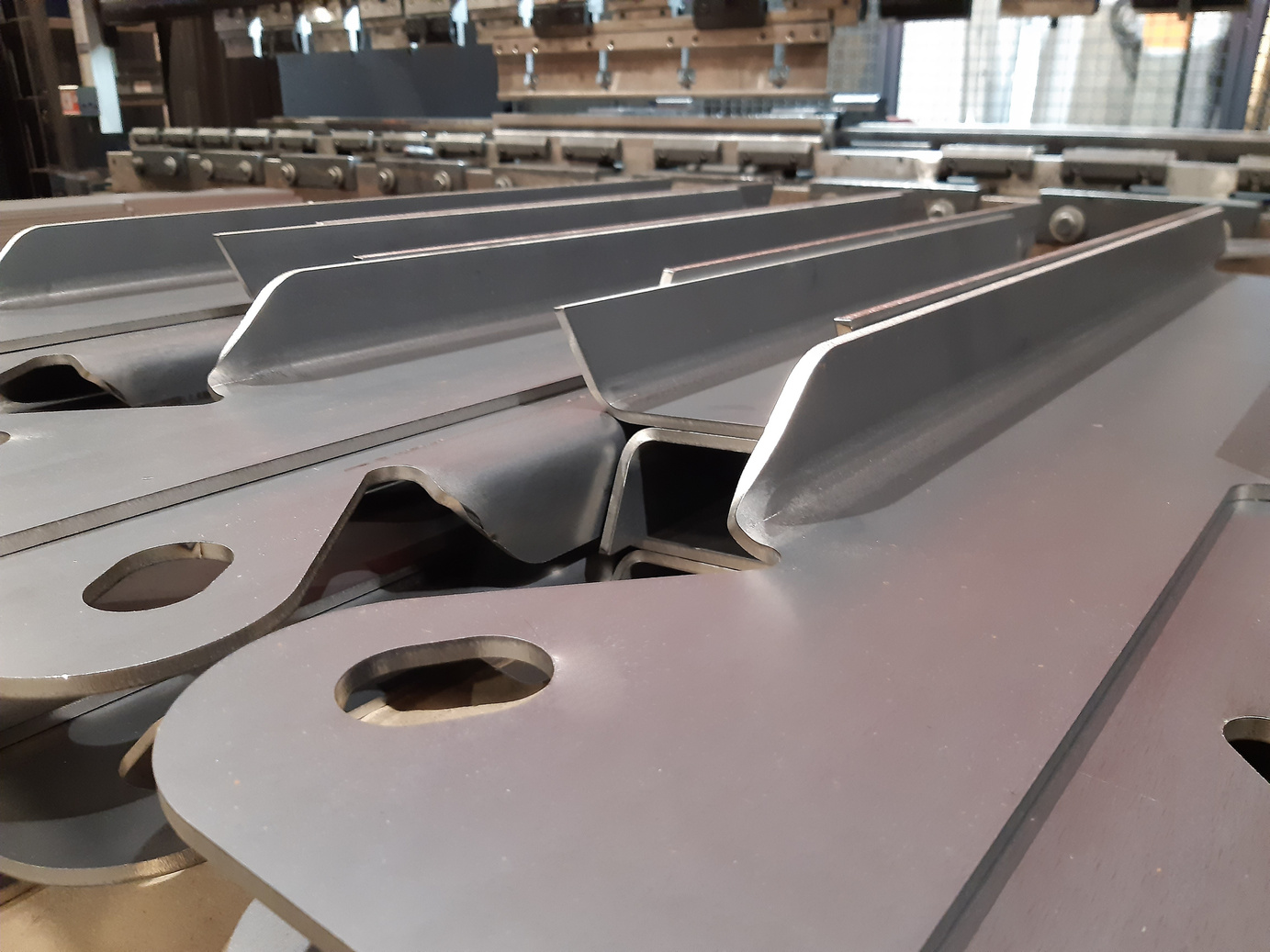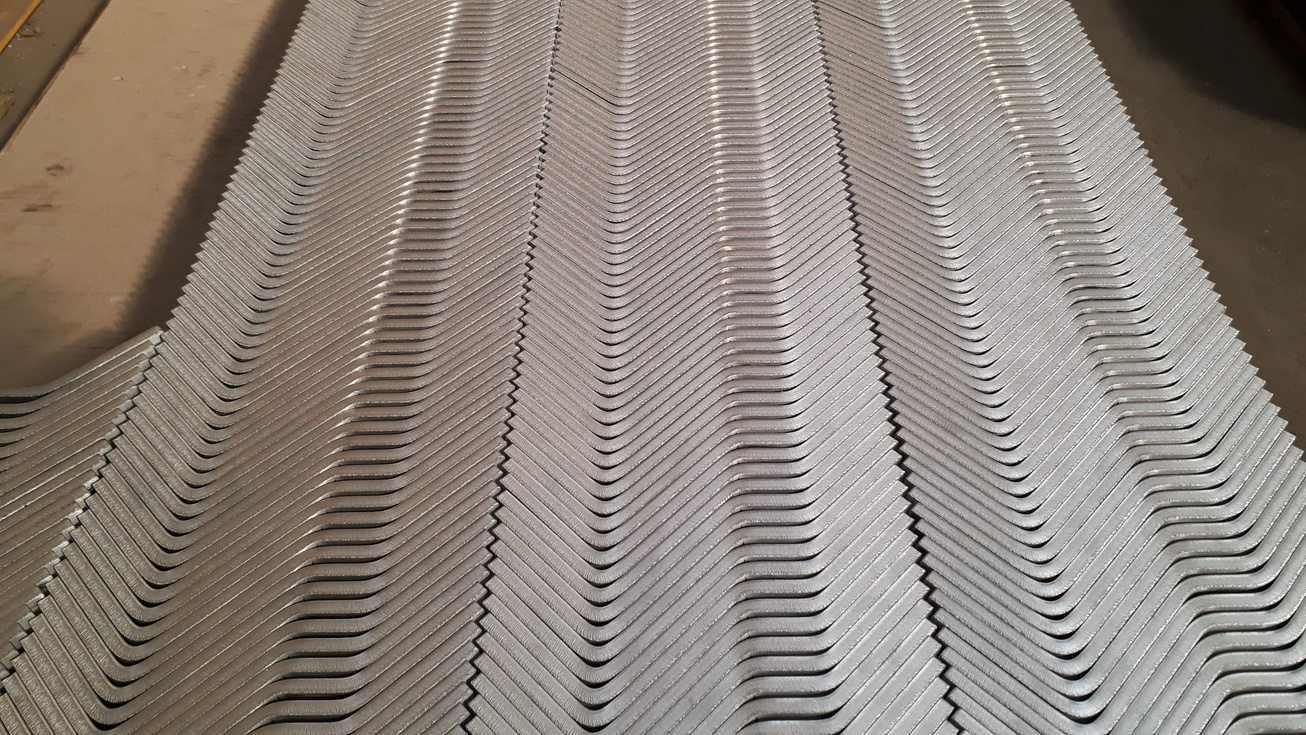
This expertise enables us to produce bent parts made of steel, stainless steel, or aluminum, according to the geometries, thicknesses, and requirements specified in the drawings. It complements our laser cutting andflame cutting services, allowing us to offer a more comprehensive solution for production needs.
Manual bending for small and medium series
Oxymetal has a fleet of 15 manual press brakes across its production sites. They can bend parts up to 4,000 mm long, with a maximum force of 320 tons.
This capability allows us to meet a wide range of needs: simple or complex parts, small and medium-sized production runs, technical components, or parts intended for use in more complex assemblies.
Bending is performed according to the dimensional requirements defined with the customer, taking into account material constraints, bend radii, angles, tolerances, and the expected repeatability.
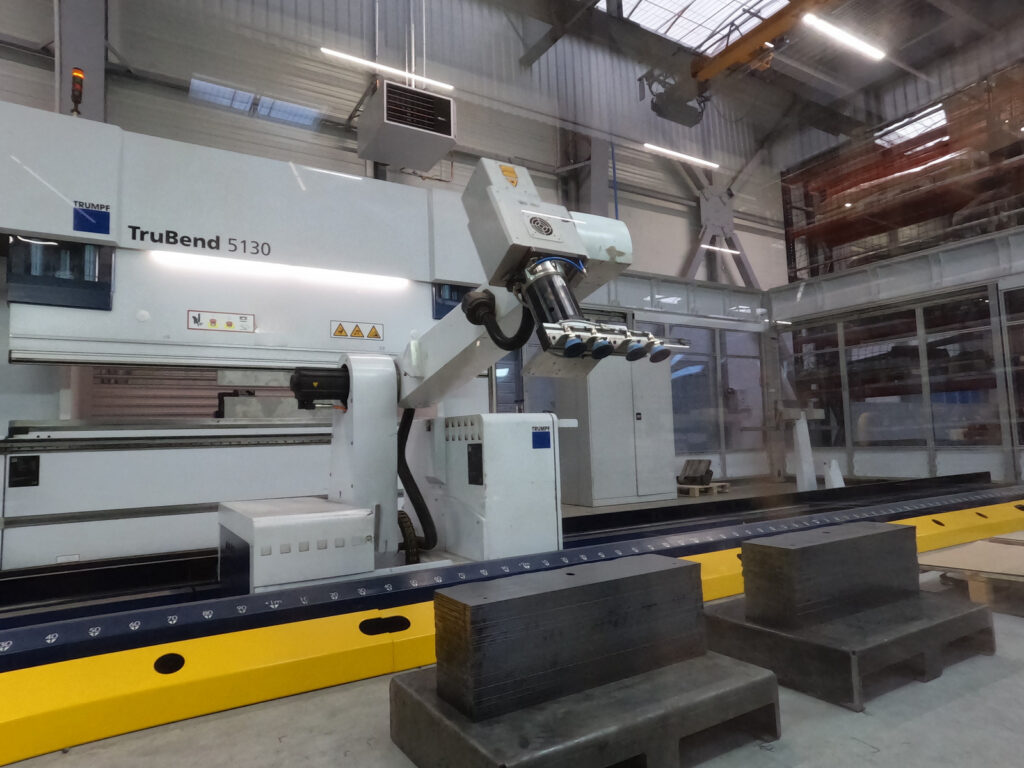
Robotic bending for recurring production
For serial production or parts that require a high degree of repeatability, Oxymetal also relies on robotic bending cells.
These cells can process parts up to 3,000 mm in length, with a maximum weight of 230 metric tons. The use of robotic bending allows for the organization of recurring production runs with a high degree of consistency and improved process stability.
This approach is particularly well-suited for parts where the volume, production rate, or repeatability requirements justify partial or complete automation of the operation.
A step integrated into the industrial process
At Oxymetal, bending is an integral part of the Group’s overall industrial organization. It can take place after laser cutting orflame cutting, before other finishing, machining, welding, or packaging operations.
This integration helps minimize disruptions in the workflow, facilitates the tracking of parts, and ensures better coordination between the various stages of manufacturing.
From the analysis of the blueprint to the performance of inspections, the bending process is an integral part of the Group’s quality and traceability procedures, ensuring that parts comply with the requirements specified in the order.
Bending: a few illustrations